
FootBiz newsletter #196: Cardinale explores Saudi football as the buyers change
RedBird’s Al-Nassr interest, Oaktree’s multi-club plans, QSI’s Eupen deal and new investment in Brazil and England.
September 18, 2026
Cardinale goes shopping in Saudi Arabia
For years, Saudi money has been coming into European football.
Now European football capital may be heading the other way.
Gerry Cardinale is exploring a potential investment in Al-Nassr as RedBird considers expanding its football portfolio beyond AC Milan and Toulouse.
Italian reports this week said preliminary and indirect contacts have taken place over the possibility of bringing Al-Nassr into RedBird's network. The important word is preliminary.
There is no announced bid and no agreement with Saudi Arabia's Public Investment Fund, which controls Al-Nassr. The original reporting described the transaction as one of several opportunities being evaluated by Cardinale and stressed that completing it would be complicated.


Cardinale appears to be thinking seriously about what the next version of RedBird's football portfolio should look like.
RedBird already controls AC Milan and Toulouse and the relationship between those clubs is beginning to deepen. Toulouse representatives have visited Milanello to study Milan's sporting operation, while the clubs have started finding practical ways of working together.
Milan provides a globally recognised premium football brand while Toulouse provides access to French talent and a development-and-trading environment.
Al-Nassr would be something altogether different and would provide exposure to one of football's fastest-growing markets, an enormous Middle Eastern audience and a club whose global recognition has been transformed by Cristiano Ronaldo.
And Ronaldo himself may yet become part of the ownership story.
Portuguese and other secondary reports this week have claimed that a potential consortium could include Ronaldo, Cardinale and Saudi investors Ibrahim Al-Muhaidib, Mohamed Al-Khereiji and Sharaf Al-Hariri, with each participant reportedly expected to provide at least $100 million.
That structure remains unconfirmed by RedBird, Al-Nassr or PIF.
The bigger point here is that Saudi Arabia is becoming a football M&A market, moving into a capital attraction phase.
There is precedent here. In July 2025, US-based Harburg Group acquired Al-Kholood, making it the first foreign owner of a Saudi Pro League club under the Kingdom's wider privatisation programme.
If Cardinale, one of the most sophisticated investors operating in global sport, believes Saudi clubs are investable assets, that transition may be happening faster than expected.
Oaktree: does Inter need a sister club?
On the other side of Milan another major financial investor appears to be thinking about multi-club ownership.
Oaktree is reportedly exploring the acquisition of another European football club to sit alongside Inter.
The idea would be to acquire a foreign top-flight club capable of acting as an intermediate development platform between Inter's U23 operation and the senior team.
That would represent a fascinating evolution, especially given that Oaktree only became Inter's owner in 2024 after Suning failed to repay financing provided by the fund.
In other words Oaktree entered as a lender and emerged as an owner. Now it may be considering becoming a multi-club owner.
One of the recurring problems facing major European clubs, especially in Italy, is the jump between academy/U23 football and playing meaningful senior minutes at Champions League level.
A second club can provide a controlled development environment where young players get senior football, recruitment can be coordinated and scouting networks can be shared.
Playing assets that are not ready for Inter can potentially develop elsewhere without having to leave the ecosystem.
But the financial angle is just as interesting. For years, the archetypal football owner was a wealthy individual prepared to fund losses.
Oaktree is an alternative-asset manager accustomed to credit, distressed situations, operational improvement and capital allocation.
If a business like that decides the optimal structure for owning one football club is to buy another one, it tells us something about how institutional investors are beginning to think about the industry.
QSI just bought another football club
One deal has completed this week.
Qatar Sports Investments has acquired full ownership of Belgian club KAS Eupen, a transaction that formalises a relationship that had already become increasingly close.
QSI took control of Eupen's sporting operations in December 2025 and has since installed former PSG scout Pasquale Sensibile as sporting director, reshaped the first-team squad around younger players and worked on strengthening the pathway between academy and senior football.
Now it owns the club outright.
That places Eupen alongside PSG and QSI's investment in Braga within its football portfolio.
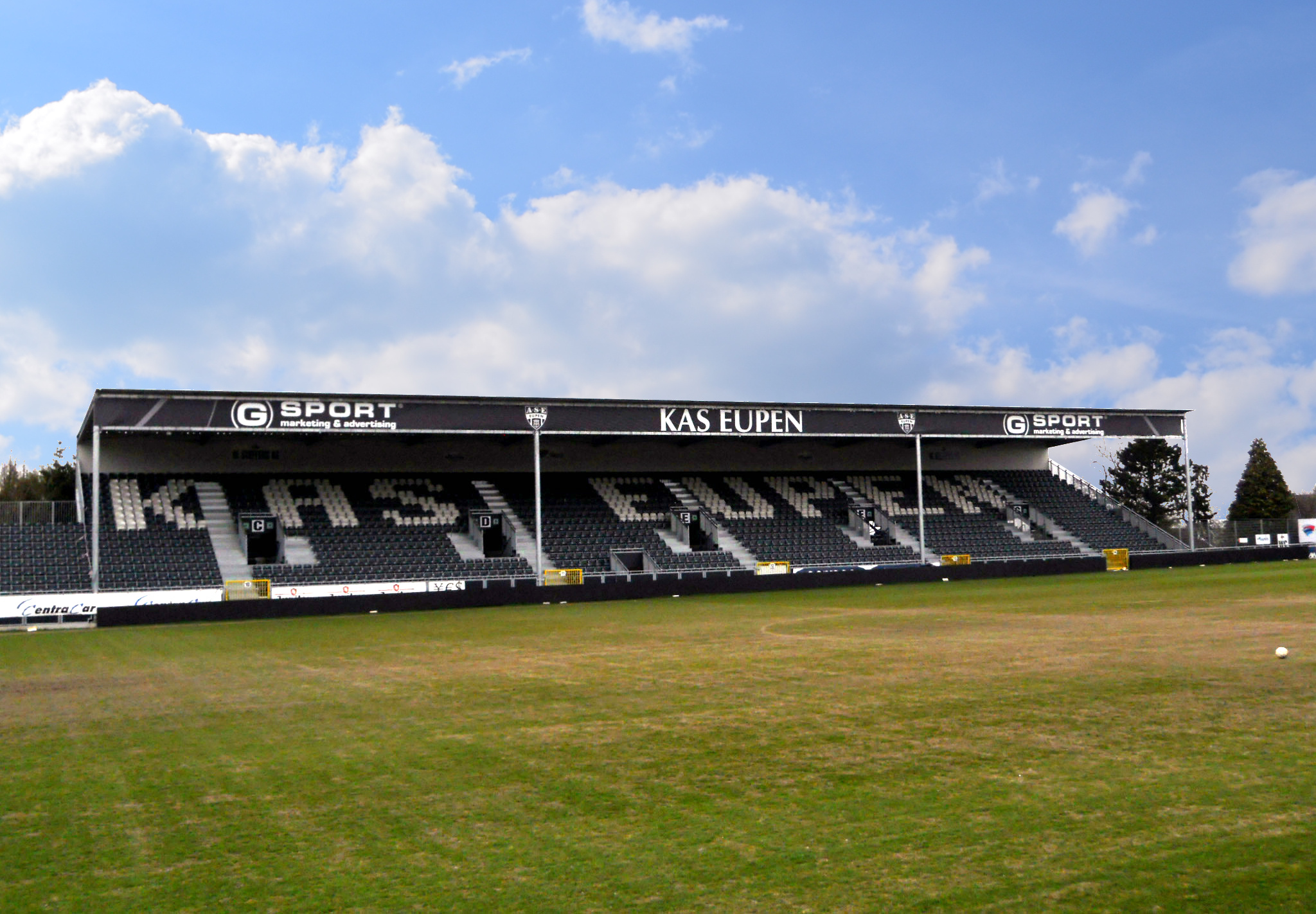

At first glance, Eupen is an unusual addition but that is precisely why the transaction is interesting.
PSG is one of world football's biggest brands, Braga regularly competes in Europe and Eupen plays in Belgium's second tier.
A smaller club can perform a completely different function inside a football portfolio. Eupen can develop players without the competitive pressure of Paris. It can give young talent meaningful senior minutes and can operate in a country renowned for developing and trading players.
The capital required to meaningfully improve the operation is tiny relative to the amounts required at PSG.
There is another unusual feature here. Eupen is the only professional football club in Belgium's German-speaking community.
That gives QSI an asset with a distinctive local identity rather than simply another generic development team.
Smart investors understand that an MCO doesn't need three versions of the same club, something that likely would defeat the purpose.
The portfolio becomes more useful when each asset performs a different job.
PSG is the flagship. Braga provides another high-level European platform and now Eupen can become the development laboratory.
The VC fund that thinks a football club is a distribution platform
Private equity in football is hardly unusual but venture capital still is.
FootBiz reported that Collaborative Fund has agreed to take a stake in D.C. United and Audi Field, with the transaction subject to MLS approval.
Collaborative is a roughly $1 billion venture-capital firm whose investment history includes early exposure to companies such as Reddit, Lyft and Sweetgreen. Subject to MLS approval, it is now taking a stake in a football club and its stadium.
Craig Shapiro's investment thesis sees sports franchises as unusually powerful consumer businesses and stadiums as potential distribution platforms for the companies in which Collaborative already invests.
Shapiro's thesis is that a football club becomes something more than an appreciating sports asset – an audience – and the stadium becomes physical distribution infrastructure.
Ironically football spent years trying to become more like technology and now technology investors are understanding that football possesses a large community of customers who voluntarily gather in the same place every week, something many startups spend billions trying to manufacture.
The original Ronaldo is back in the club-buying business
Ronaldo Nazário sold Cruzeiro in 2024 and Real Valladolid in 2025 but his break from football ownership hasn't lasted long.
The Brazilian is part of an investment group alongside former Real Madrid and Brazil teammate Roberto Carlos that has been approved to acquire 80% of the new SAF of Inter de Limeira, the historic club from the interior of São Paulo.
The project is being led by Brazilian football executive Enrico Ambrogini, while Saudi prince Abdullah bin Saad bin Abdulaziz Al-Saud is also among the investors. The precise ownership split within the investment vehicle has not yet been finalised publicly.
Inter's association will retain the remaining 20%.
The transaction received overwhelming approval from the club at the end of August – 53 votes in favour and one against – although legal and administrative steps still need to be completed before the investors formally assume control.

.jpg?utm_source=footbiz.beehiiv.com&utm_medium=referral&utm_campaign=footbiz-newsletter-196-cardinale-explores-saudi-football-as-the-buyers-change)
The group's business plan projects as much as R$454 million (£62m/$85m) of financial activity over the first ten years, although that figure should not be confused with a guaranteed capital injection.
More concrete is a plan for up to R$20 million of investment across 2026 and 2027, while the investors will also assume responsibility for debts currently estimated at approximately R$8.5 million.
An earlier version of the proposal also provided for a minimum R$187 million investment guarantee over 15 years.
The ambition of the sporting objective is considerable – take Inter de Limeira to Série A within eight seasons.
Why Inter de Limeira?
Ronaldo has already experienced both ends of football ownership.
At Cruzeiro, he acquired control of a giant Brazilian club in severe financial distress, helped oversee its immediate return to Série A and subsequently sold his stake. Valladolid presented a rather different challenge in Spain.
Inter de Limeira is different again. This is a 112-year-old club with genuine history but a tiny contemporary economic base compared with Brazil's giants.
Inter became the first club from the interior of São Paulo state to win the Campeonato Paulista, famously beating Palmeiras in the 1986 final. Two years later it won Brazil's Série B. Then came decades of decline.
Now the thesis is essentially to take an underdeveloped historic football asset and build the business underneath it.
The plan includes a new training centre, improvements to the Major Levy Sobrinho stadium, greater investment in technology and administration and, critically, the development of the academy.
Player trading is expected to become one of the SAF's principal sources of revenue.
Ambrogini isn't new to Ronaldo. He worked on Ronaldo's projects at both Cruzeiro and Valladolid, including serving as Cruzeiro's director of operations during its promotion-winning 2022 season.
Ambrogini was CEO of Inter de Limeira between 2019 and 2021 and knows the asset.
Ronaldo therefore isn't parachuting into an unfamiliar Brazilian lower-league club alongside an investment banker he has just met. He is backing an executive he has worked with before, at a club that executive has previously run.
Roberto Carlos has publicly described himself and Ronaldo as buying the club alongside Ambrogini and their other partners.
And then there is Abdullah bin Saad bin Abdulaziz Al-Saud. The Saudi prince publicly identified Inter as his first investment in a sports club and said he would be investing alongside Ronaldo and Roberto Carlos.
It creates an unusual capital table including Brazilian football operators, two World Cup winners, Saudi capital and a historic lower-league Brazilian club.
That combination may ultimately prove more significant than the size of this particular transaction.
The Americans are still buying — they’re just looking further down
Another American consortium is attempting to buy an English football club. This time it’s Shrewsbury Town.
A US investment group led by businessman Scott Davidson is seeking to acquire the League Two club from long-standing owner Roland Wycherley. The consortium has already received approval from both the EFL and Independent Football Regulator, with the parties now working towards completion.
And there is a familiar football name involved. Former Liverpool, Blackburn and US national-team goalkeeper Brad Friedel is set to become a director, subject to his individual IFR approval.
Davidson isn't arriving in European football completely cold. He is already involved with Scottish club Spartans, alongside Will Dotson and Craig Graham, who are also expected to join the Shrewsbury board.
The transaction is characterised by US capital looking further down the pyramid for value rather than another American billionaire buying an English trophy asset.
Buying a Premier League club now requires hundreds of millions and, increasingly, billions. Further down the English pyramid, the entry price falls dramatically but the potential upside doesn't disappear with it.
Shrewsbury has more than a century of history, its own stadium, an established supporter base and membership of the most commercially valuable football pyramid in the world. And unlike most conventional businesses, promotion is a mechanism capable of changing its economics remarkably quickly.
An investor doesn't necessarily need English football revenues to grow enormously, he just needs his club's share of them to grow.
League Two to League One, League One to the Championship and, however improbable it may initially appear, the Championship to the Premier League.
Each step materially changes the revenue profile and the value of the asset.
There is another reason this particular transaction is worth watching and that is the spectre of The Independent Football Regulator.


For years, English football argued about what stronger ownership regulation might look like. Shrewsbury offers one of the early real-world examples of the new regulator processing a change of control in English football.
Shrewsbury is exactly the sort of transaction that will demonstrate how the new system works away from the glare of the Premier League – how prospective owners are assessed, what financial resources they need to demonstrate and how regulatory approval interacts with the timetable for completing a transaction.
So perhaps the interesting thing about Shrewsbury isn't that another group of Americans wants to buy an English football club, it's that the search for value is moving and within an unprecedented regulatory framework.
Football M&A just had its biggest year
The football acquisition market is accelerating.
According to Off The Pitch data cited this month by Norton Rose Fulbright, 78 football M&A transactions were completed globally in 2025.
That was up from 62 in 2024 and more than half involved US investors. Majority acquisitions increased from 35 in 2024 to 50 in 2025 and half of English football M&A transactions involved clubs in League Two or below.
Several forces are pushing in the same direction. American sports franchises have become extraordinarily expensive, football provides far more entry points, institutional investors are becoming increasingly comfortable with sports assets, owners have become more sophisticated about selling minority interests rather than entire clubs, multi-club ownership has created strategic buyers and the enormous growth in sports valuations has changed the perception of what a football club actually is.
Twenty years ago, buying a football club was something billionaires did because they liked football. Now, even pre-acquisition, investors’ considerations around who the next buyer is are front of mind.
Follow the buyer
There is a useful way of looking at recent stories. Aside from what we have covered in this newsletter, we have also recently explored the stories of the acquisition of Estrela Amadora and the institutional capital circling Serie A.
Forget the clubs and leagues for a moment and look at who is trying to buy them.
Gerry Cardinale / RedBird
Private investment capital exploring Saudi football and potentially extending a multi-club network.
Oaktree
A credit investor that became the owner of Inter and may now deliberately become a multi-club operator.
Qatar Sports Investments
A sovereign-linked sports investor adding a low-cost development club beneath much larger European assets.
Collaborative Fund
A venture-capital investor viewing a football club and stadium partly as a consumer-distribution platform.
Carlyle / Bain / Oaktree / Nextalia
Institutional capital seeking exposure not to a club but to the international commercial economics of Serie A itself.
Müller / Hummels / Sommer / Hernández
Footballers investing alongside professional investment managers rather than attempting to become old-fashioned benefactor owners.
Six types of buyer, with six very different investment theses.
See you next week.
FootBiz
Ți-a plăcut?
Primește următoarea ediție direct în inbox.
Gratuit, de două ori pe săptămână.