
FootBiz Women: The NWSL Opens Its Star Salaries to Any Player
The NWSL opens its star-pay rule, Liga F’s commercial income falls and Racing Louisville faces ownership pressure. Plus women’s team valuations, FIFA’s US club tournament and Columbus’s first GM.
October 25, 2026
Good morning.
The NWSL has scrapped the eligibility tests on its High Impact Player rule, while Liga F's new budget shows its commercial income falling by a third. Jessica Berman says fixing Racing Louisville is now her job, the Premier League's new financial rules change why clubs invest in their women's teams, and FIFA hands the first Women's Club World Cup to the United States. Columbus hires a general manager who has built an NWSL expansion roster before. Elsewhere, the FA extends Sarina Wiegman's contract, Valvoline and India's women's league sign sponsorship deals and Valencia's new investors value the club, women's team included, at €1.25 billion.
Any Player Can Now Be a High Impact Player
The NWSL has dropped the merit tests that decided who could be paid as a High Impact Player, settling a grievance brought by the NWSL Players Association. From next season, any player can be designated an HIP, according to Front Office Sports.
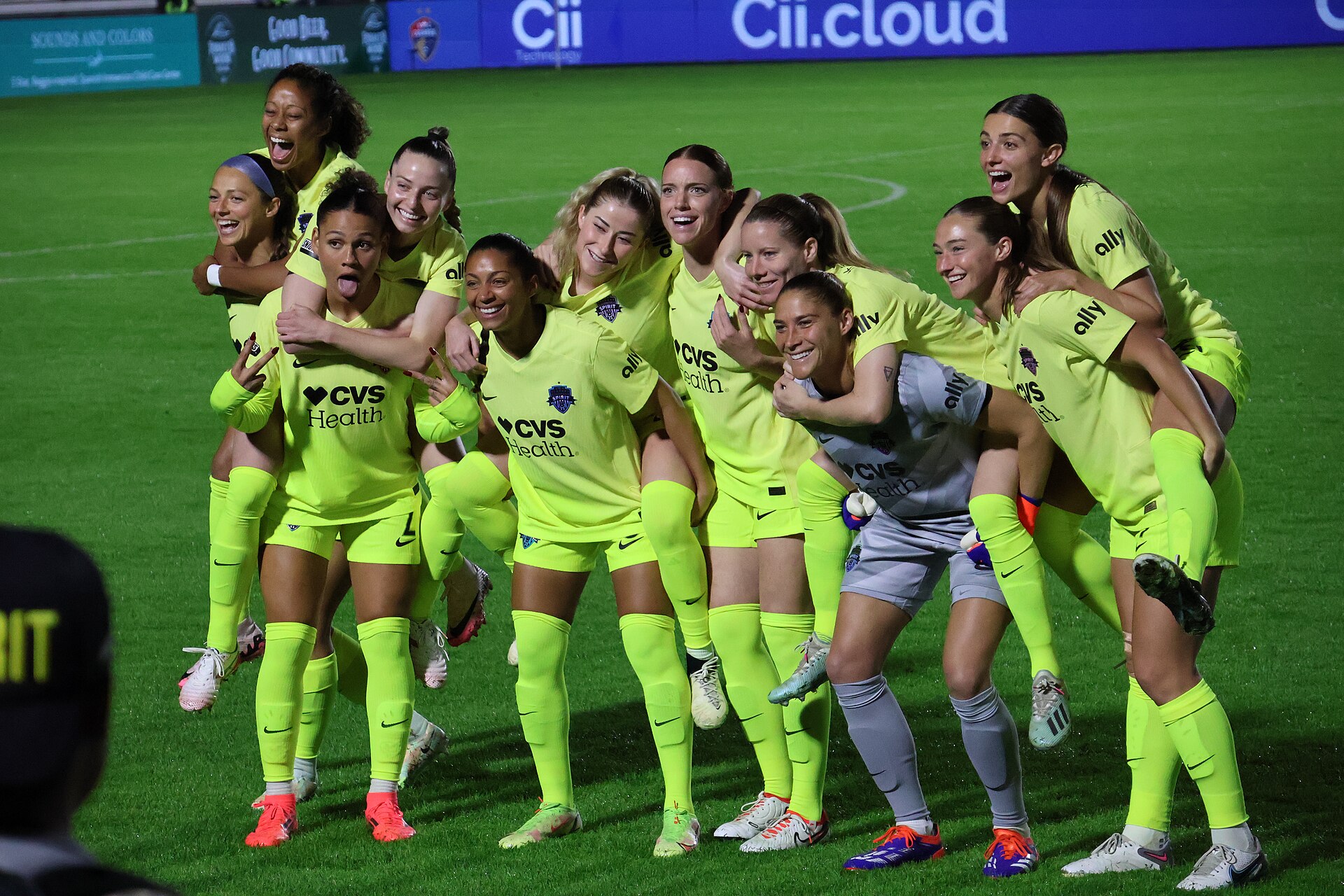
Photo: Hameltion · CC BY-SA 4.0 · Resized; uncropped.

The rule lets each club spend up to $1 million above the salary cap on HIPs. Until now, qualifying meant appearing in one of four outside rankings: the top 30 of Ballon d'Or voting, the top 40 of The Guardian's 100 best players, the top 40 of ESPN FC's top 50 or the top 150 of SportsPro's most marketable athletes. About 100 players met at least one of those tests.
To be designated, a player must take up at least 12% of the league's base salary cap, according to The Equalizer, and the league can lower that threshold. With the base cap at $3.5 million, the floor currently works out at roughly $420,000. The total cap is $3.7 million once a share of each club's revenue from the previous season is added, and the league has also agreed to disclose its revenue-sharing figures regularly so the union can check how the cap is calculated.
Under the settlement, the NWSL can limit the number of HIPs at each club, swapping a quality filter for a possible quantity limit. Clubs will decide who is worth the money, but the league keeps the power to stop any one club stacking its squad with designated stars, provided it tells the union about any limit before the relevant free-agency window opens.
The rule was built at speed. Berman initially vetoed the Washington Spirit's offer to Trinity Rodman, arguing that the backloaded contract was designed to get around the cap by anticipating revenue growth, and the HIP mechanism appeared three weeks later. The union argued from the start that it was a unilateral change to the cap made outside collective bargaining, proposed a straight $1 million rise in the cap instead and filed a grievance. It has now won the eligibility point, along with a requirement that the league explain any contract veto to the union in writing within 72 hours.
When FootBiz Women looked at Barbra Banda's new Orlando contract last month, the HIP rule was the NWSL's way of keeping global stars without dismantling the cap, with the league estimating it could add as much as $115 million in player compensation over the rest of the CBA. From 2027, the decision about who counts as a star belongs to the clubs paying them rather than the journalists compiling the rankings.
Liga F Is Budgeting for More Money and Less Commercial Revenue
Liga F expects to take in €33.3 million in 2026/27, almost 30% more than last season's budget, but the money it earns from selling its own product is going the other way. According to 2Playbook, revenue from broadcasting and sponsorship is budgeted to fall by a third, from €18 million to €12 million.
Two contracts explain most of the drop. LaLiga's commercial agreement with Liga F, worth about €8 million in 2025/26, ended in the summer a year early, removing around €10 million that had been expected this season. DAZN, which paid around €7 million a season under its original five-year deal, remains the main domestic broadcaster under a new contract to 2029 whose value hasn't been disclosed but is expected to be lower, and it no longer controls the international rights.
The growth sits in "other operating income", budgeted at €21.25 million against about €7.8 million a year earlier, which 2Playbook describes as extraordinary and unconnected to the competition's traditional revenue. Liga F didn't explain the line to the outlet. Inclusion in La Quiniela, the state football pools, is worth €5 million this season. The investment of up to €55 million from Pau Gasol's Gasol16 Ventures, approved by 12 of the 16 clubs on June 29, has not yet been formalised, so it is unclear how much of it the budget already assumes.
The clubs are promised close to €21 million if targets are met, about €1.3 million each on average across the 16 teams. Of that, €7.9 million comes from television and commercial business and €12.8 million is described as monetary aid. The league's own costs are being cut, with personnel down 9% to €1.88 million and supplies down to €500,000 from €3.7 million last season, while other operating expenses rise 65% to €9.6 million. The budget shows a pre-tax surplus of €140,892.
When FootBiz Women covered the Gasol16 agreement last month, the question was whether handing an investor up to 49% of commercial revenues for 25 years was too high a price. The budget shows the pressure behind the decision. Liga F's recurring commercial income is shrinking, and income from outside its broadcasting and commercial business now accounts for almost two-thirds of what it expects to earn.
Berman Says Louisville Is Her Problem to Solve
NWSL commissioner Jessica Berman says finding a future for Racing Louisville is her responsibility, as the club's owners weigh their options and FC Cincinnati waits. Speaking at Front Office Sports' Tuned In summit in New York on October 13, she said the league's expectations of owners now bear no rational relationship to those of five years ago.
Racing is owned by Soccer Holdings, the group chaired by John Neace that also owns second-division men's side Louisville City FC. The two teams share training facilities and the 15,000-capacity Lynn Family Stadium. Racing has reached the playoffs once since joining the league in 2021 and was knocked out of contention for this year's playoffs in late September, after a sixth straight defeat.
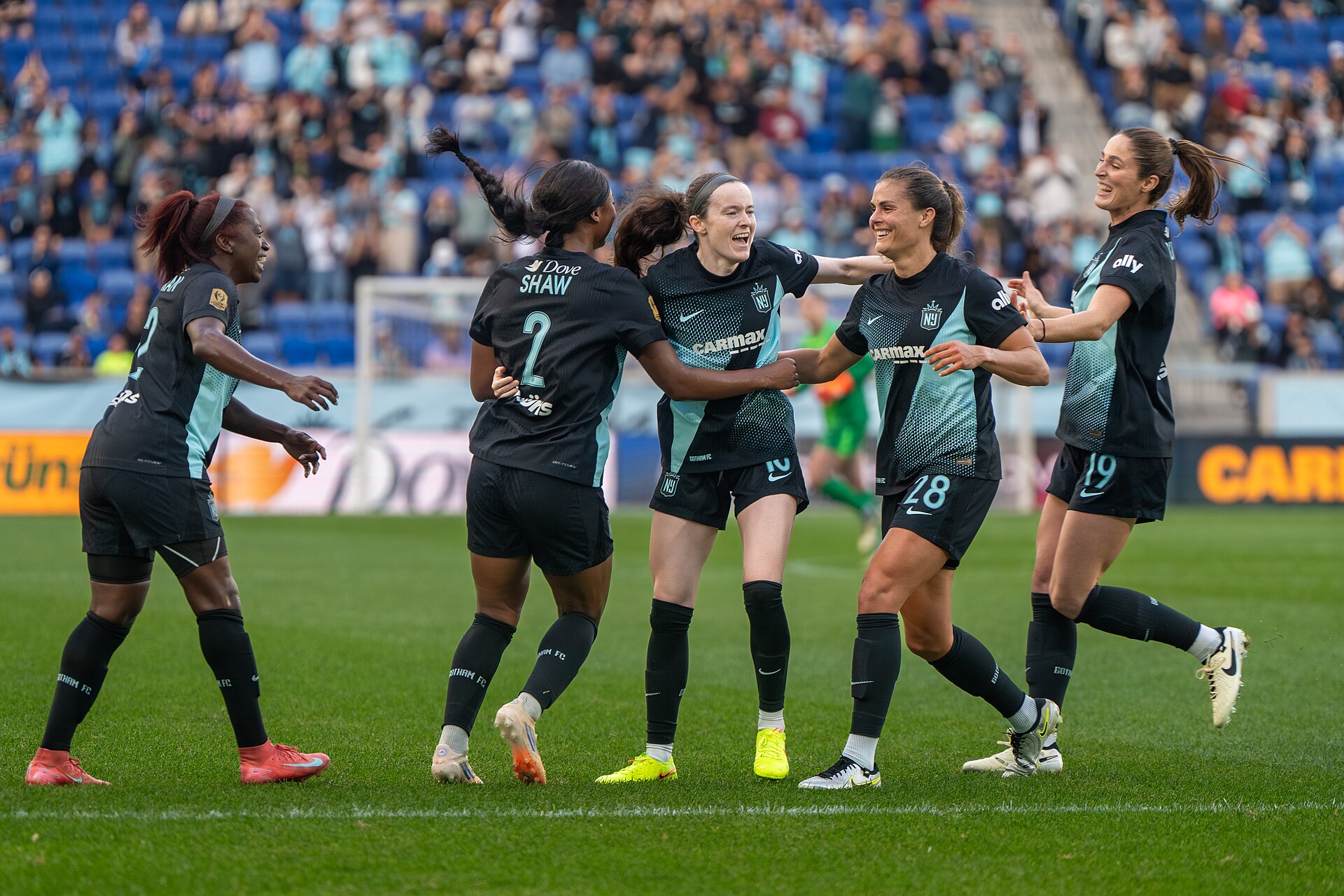
Photo: Bryan Berlin · CC BY-SA 4.0 · Resized; uncropped.

The gap with the league's newest owners is enormous. Soccer Holdings paid roughly $1 million to $2 million to enter the NWSL, according to FOS, while the Haslam family's Columbus franchise paid a $205 million expansion fee. Berman said the original owners invested under a completely different value proposition and expectations for capital.
The pressure has been building all year. ESPN reported earlier in 2026 that the club was exploring a sale of ownership stakes, and in August Neace told local business and political leaders that Racing would be forced to act if attendance didn't improve. ESPN then reported in September that the owners of MLS side FC Cincinnati had held talks about buying the club and relocating it.
Berman didn't rule Cincinnati in or out. She called it an example of an MLS owner that has proven it can run a best-in-class organisation in another league, and said the NWSL wants to keep talking to owners like it, whether they share resources with a men's club or operate independently. Cincinnati bid unsuccessfully for an expansion team with a group that included Caitlin Clark, and a representative for Clark wouldn't say whether she'd be involved in a relocated team.
The NWSL has 16 teams this season and reaches 18 in 2028 when Atlanta and Columbus arrive, and Berman says it is in active conversations about teams 19 and 20. That leaves Racing's owners holding a franchise in a league whose entry price has risen at least a hundredfold since they joined. Either a buyer pays something close to the new price or the league finds a way to make an original owner fit the new expectations.
Women’s Teams Can No Longer Be Sold to Meet the Premier League’s Rules
The route Chelsea, Aston Villa and Everton used to help balance their books under PSR has closed, and the framework that replaced it gives clubs a different reason to keep investing in their women's teams, according to analysis published by The Pyramid on October 13.
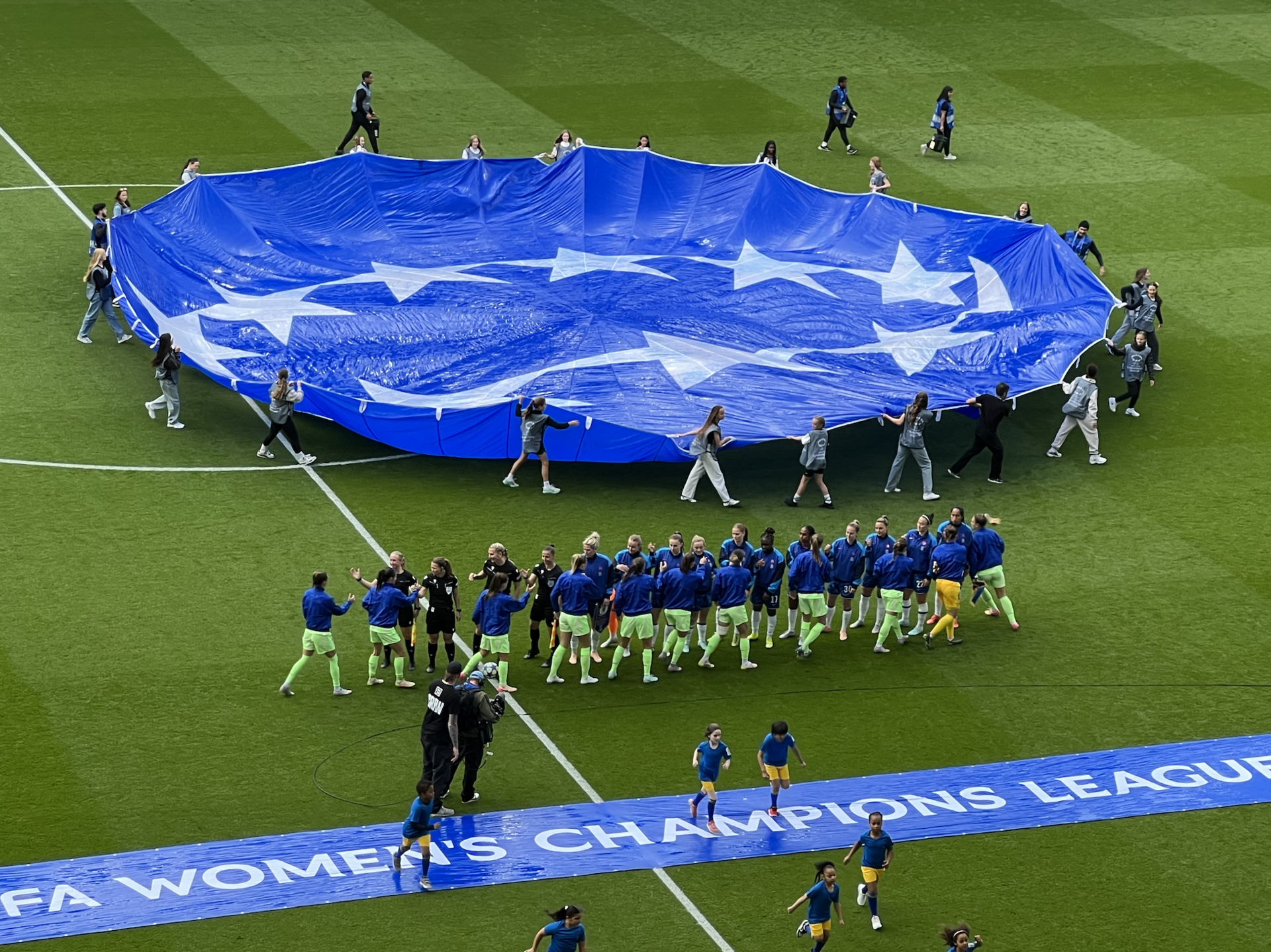

All three clubs sold their women's teams to companies under the same ownership. Chelsea sold its women's team to a sister company for £200 million in June 2024, booking a profit of almost that amount on the disposal. Villa agreed a reported £55 million sale of its women's team to its parent company, V Sports, in 2025, and Everton followed that summer with a sale of around £60 million to Roundhouse Capital Holdings, a company controlled by owner Dan Friedkin, according to The Times.
The Premier League has since shut that door. Under the Squad Cost Ratio, which replaced PSR from this season, sales of non-player assets no longer add to a club's eligible revenue. The new rules treat women's teams favourably in another way, however. Their revenue counts towards a club's eligible income while their costs are left out of squad spending, so a women's team that grows its revenue now increases what the men's side is allowed to spend.
Outside money has since put its own price on Chelsea Women. Alexis Ohanian's £20 million investment in 2025 was reported at the time to value the club at around £200 million, in line with the internal price, with some later reports putting the post-investment figure at £245 million.
The sales gave clubs a one-off accounting profit that is no longer available. What remains for Chelsea, Villa and Everton is a standalone women's team, its own valuation and, under the new rules, a direct incentive to grow its income.
FIFA Hands the US the First Women’s Club World Cup
The United States will host the first FIFA Women's Club World Cup, from January 5 to 30, 2028. FIFA announced the decision on October 22 after what it called a detailed assessment, and Inside World Football reports that no official tender for the hosting rights was issued.
Sarai Bareman, FIFA's chief women's football officer, said recent US tournament experience, interest in the women's game and elite infrastructure made the country the standout option. Host cities have not yet been named.
The field will have 19 clubs – six from UEFA, three each from the AFC, CAF, Concacaf and CONMEBOL, and one from the OFC. Arsenal, Barcelona, Club América, Gotham FC, Corinthians, Wuhan Jiangda and North Korea's Naegohyang have already qualified.
The US is also taking the smaller annual event. The 2027 FIFA Women's Champions Cup, for the six continental champions, will be played at Nu Stadium, Inter Miami's home, from January 26 to 31 after a calendar change.
The January window suits the NWSL, which is in its off-season, but lands in the middle of the European domestic calendar. The WSL told FIFA after the dates were set that they could be catastrophic for the league, according to The Guardian, although the Women's Champions League will be on its winter break.
The US hosted the expanded men's Club World Cup in 2025 and co-hosted this summer's World Cup, so FIFA is choosing infrastructure and a promoter network it already knows. It is also choosing a home market with an American club, Gotham FC, already in the field. The sale it now has to make is four weeks of women's club football in January, in venues and cities still to be announced.
Columbus Hires a GM Who Has Built an NWSL Expansion Roster Before
Columbus NWSL has appointed Lucy Rushton as its first general manager, well over a year before the club's 2028 debut. Rushton, 41, was the first GM of Bay FC and built the roster that took the club to the playoffs in its inaugural season.
Before that she worked in analysis at Watford and Reading, helped build Atlanta United's MLS Cup-winning squad as head of technical recruitment and became D.C. United's general manager in 2021. Bay FC then hired her to build an expansion roster six months before its first NWSL season.
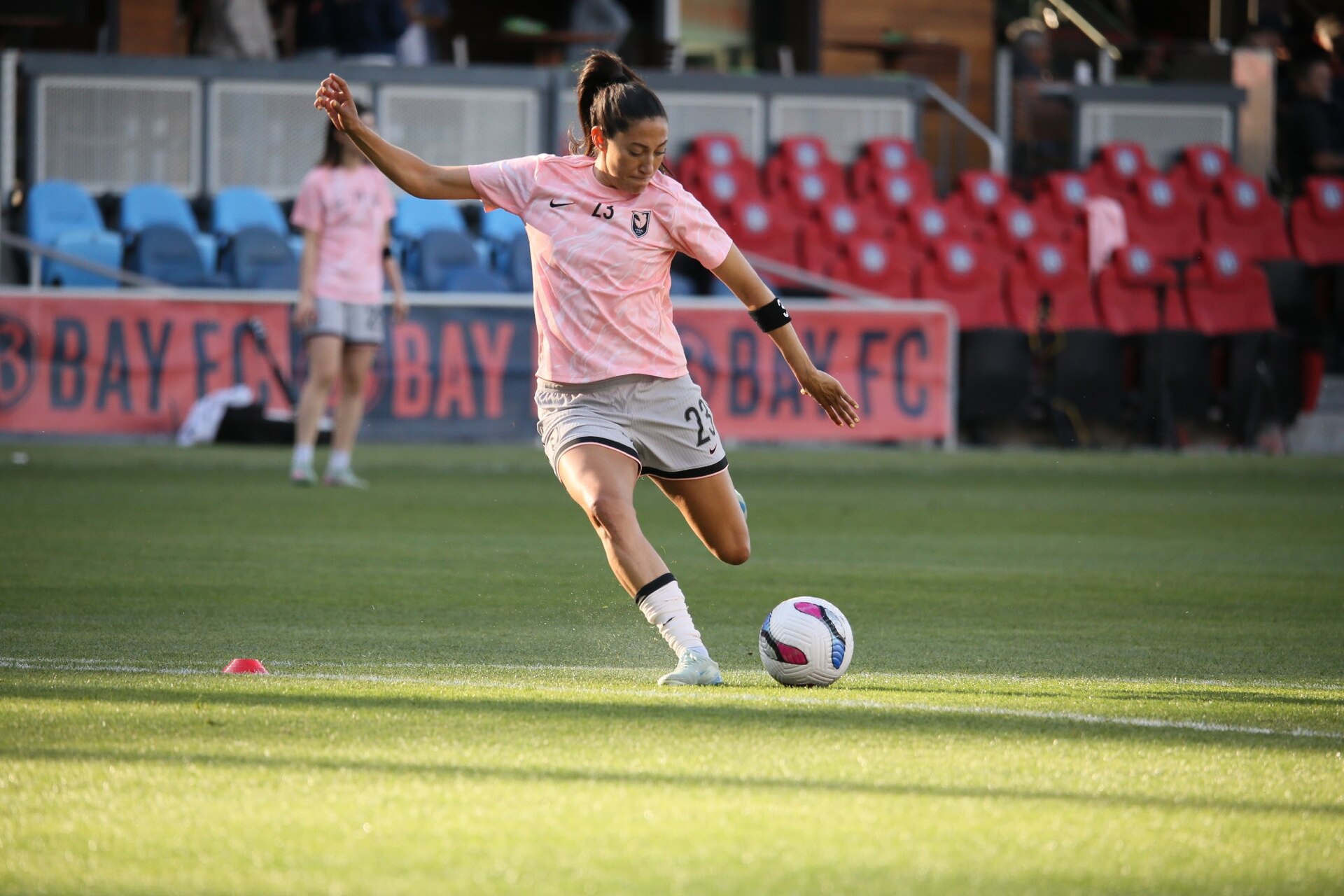
Photo: Taylor Vincent · CC BY 4.0 · Resized; uncropped.

Neither GM job lasted long. D.C. United replaced her after one season in which the club finished last, and she resigned from Bay FC 14 games into its first campaign without giving a reason. Bay FC went on to become only the second NWSL club to reach the playoffs in its first season, and Rushton has since advised Gotham FC and the Portland Thorns.
Haslam Sports Group addressed that history directly. Tim Bezbatchenko, HSG's president of global soccer, told The Columbus Dispatch that the club had discussed each departure with Rushton, and said building an expansion team in six months was close to impossible. Rushton will work under Bezbatchenko alongside Crew general manager Issa Tall, with roughly 16 months to assemble a roster.
The appointment fills the sporting side of a structure that already has Mary Shepro running business operations across the Crew and the NWSL club. After paying a $205 million expansion fee, the Haslams have hired someone who has built an NWSL roster from nothing and taken it to the playoffs, and given her more than twice as long to do it this time.
Liked this?
Get the next issue in your inbox.
Free, twice a week.