
FootBiz South America: Millonarios Sale Talks Face New Doubts
Millonarios sale talks face conflicting reports, AFA expands LPF Play and new investment, stadium plans and player-trading economics reshape the region’s club business.
October 22, 2026
Good morning.
Joseph DaGrosa’s Kapital Football Group has been pursuing control of Millonarios, although Colombian reporting is now split over whether the negotiations remain active. The AFA has taken much of Argentina’s lower-league television business in-house through LPF Play, while former NBA executive Gersson Rosas has invested in Internacional de Bogotá. Grupo Caliente has held investment talks with Barcelona SC, Brazil’s competition regulator is examining football-rights contracts running until 2074, Nacional faces a major stadium vote, Defensor Sporting has opened up the economics behind one of its player sales and Universidad Católica has completed its sporting-director search.
Kapital Talks Over Millonarios Are Now in Doubt
Kapital Football Group, the investment business associated with American financier Joseph DaGrosa, has been negotiating over the acquisition of the controlling interest in Millonarios held by Amber Capital. Amber controls approximately 86.1% of Azul & Blanco S.A., the company through which the Bogotá club operates, while Colombian reports have placed a potential transaction in the region of US$70 million to US$80 million.
Hugo Varela, vice-president and senior partner at Kapital Football Group, has been directly involved in assessing the opportunity. He was at El Campín in September for Millonarios’ game against Boyacá Chicó, while reporting subsequently described the prospective buyer as moving through due diligence covering the club’s financial, legal and administrative position.
Gustavo Serpa, president of Millonarios’ board and Amber Capital’s representative in Colombia, has publicly addressed the ownership discussions. He confirmed earlier this year that Amber had received an offer for its controlling stake while stressing that an approach should not be confused with a completed transaction. No subsequent change of control has been announced by the club.
The picture became considerably less clear this week. Reporting on October 20 continued in some outlets to describe Kapital as being in due diligence, while other Colombian media reported that the negotiations had stalled and that the American group was no longer proceeding. Neither Millonarios, Amber Capital nor Kapital Football Group has issued a formal statement confirming that the transaction has been completed or terminated.
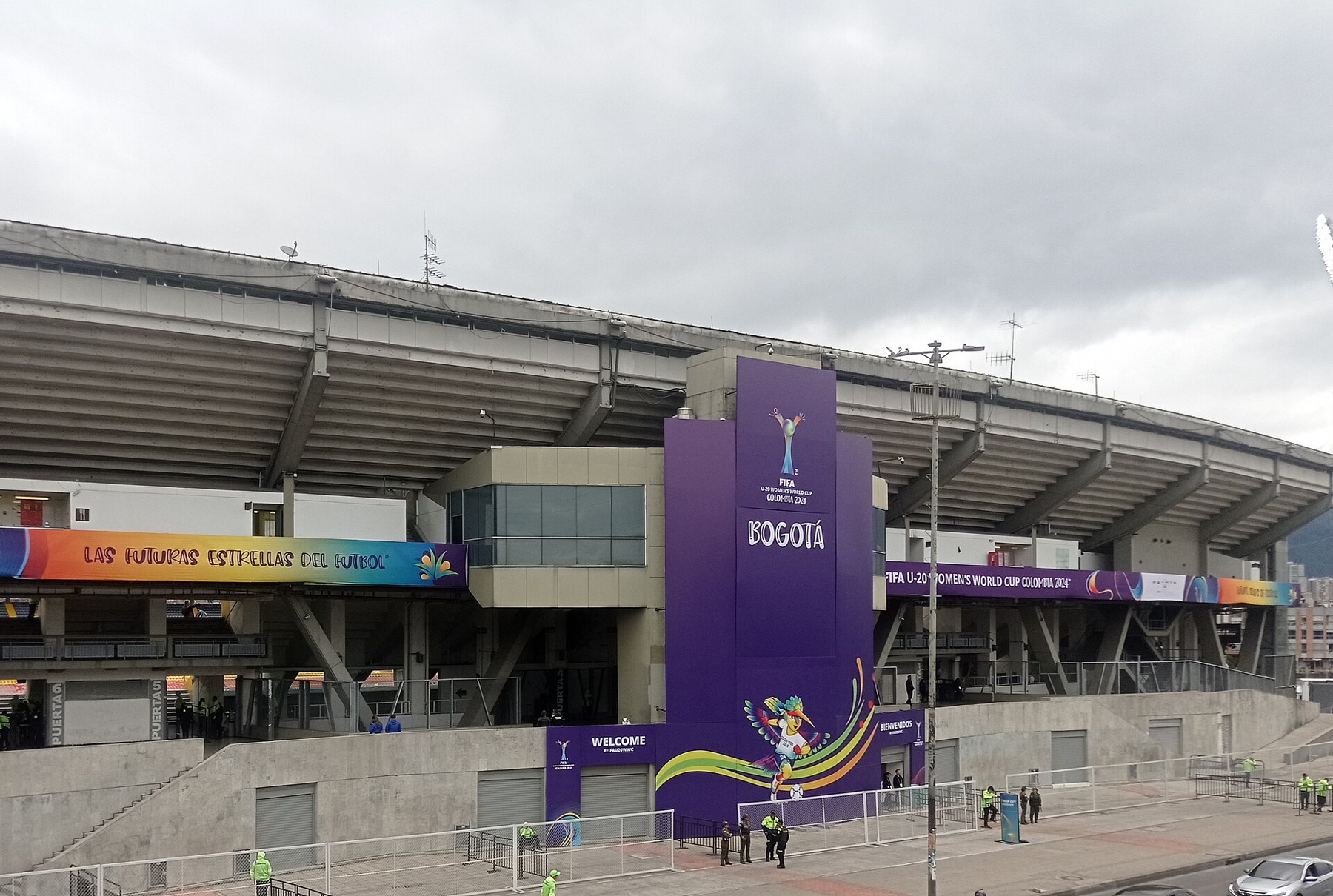
Photo: Nderakóre 1 · CC BY 4.0 · Resized; uncropped.

A further complication emerged around El Campín. Reports last week said the prospective buyer had become concerned by uncertainty over the availability and condition of the stadium following problems associated with its use for concerts. Kapital has not publicly confirmed that the stadium issue has caused it to reconsider the acquisition.
DaGrosa and Varela previously worked together during the American takeover of Girondins de Bordeaux in 2018. DaGrosa’s consortium acquired the French club from M6 with financing from King Street Capital Management, before disagreements with King Street resulted in his departure the following year.
Kapital has subsequently continued to pursue football investments with an emphasis on commercial development and player trading. Millonarios would provide access to one of Colombia’s largest supporter bases, an established corporate structure and a domestic market that continues to export significant numbers of players to Europe and North America.
The existing shareholder also has a substantial European football interest. Joseph Oughourlian, whose Amber Capital is the controlling investor in Millonarios, is president of RC Lens. For now, Amber remains in control and Kapital remains a prospective buyer whose current position has not been formally clarified by either party.
AFA Takes the Ascenso Direct-to-Consumer
The Asociación del Fútbol Argentino has started charging supporters directly to watch the country’s principal lower divisions after failing to secure an external television offer it considered sufficient. From October 15, matches from the Primera Nacional, Primera B Metropolitana and Primera C moved behind a paid tier on LPF Play, priced at ARS15,000 a month, while the Federal A, women’s football and Promocional Amateur remain available through the platform’s free plan.
Photo: Facundo Diez · CC BY-SA 3.0 · Resized; uncropped.

The switch follows AFA’s decision not to renew its previous arrangement with Tele Red Imagen, the business jointly owned by Grupo Clarín and Torneos. The governing body subsequently invited offers for the Ascenso rights but decided to produce and distribute the competitions itself after prospective bidders failed to reach its valuation. AFA contracted production company La Corte and began distributing matches through LPF Play earlier this year, initially without charge.
Industry estimates cited by La Nación put LPF Play at approximately 600,000 registered users. Converting every one of them at ARS15,000 would theoretically generate ARS9 billion a month, although actual paid conversion will inevitably be considerably lower. Argentina’s Pack Fútbol for the top division currently has around 1.7 million to 1.8 million subscribers.
AFA promised Primera Nacional teams monthly guaranteed distributions of ARS65 million, approximately 58% more than they received last season, after reportedly seeking to quadruple the value generated by Ascenso television rights, which produced around ARS6 billion during 2025.
AFA initially funded those higher distributions from its own resources while LPF Play remained free. Introducing subscriptions gives the governing body its first direct consumer revenue stream from the platform and provides a test of whether the audience for Argentina’s second and third tiers can support the higher payments promised to participating clubs.
Former NBA Executive Gersson Rosas Invests in Internacional de Bogotá
Gersson Rosas, the Colombian-born basketball executive who has spent more than two decades in the NBA, has become an investor in Internacional de Bogotá.
The club announced Rosas’ arrival on October 16, adding another experienced sports executive to the ownership group behind the former La Equidad. The size of his investment and the equity interest he has acquired have not been disclosed.
Internacional is led locally by president Nicolás Maya, while Al Tylis and Sam Porter led the investment group that acquired La Equidad in January 2025. Tylis and Porter became co-presidents of the club’s board following the acquisition, with the wider ownership group also including Ryan Reynolds, Rob McElhenney, Eva Longoria, Kate Upton and Justin Verlander.
Rosas spent 17 years with the Houston Rockets, briefly served as general manager of the Dallas Mavericks and was president of basketball operations at the Minnesota Timberwolves from 2019 to 2021. He later became a senior vice president with the New York Knicks and was part of the front office when the franchise won the 2026 NBA championship, its first title since 1973.
Rosas said his interest in Internacional is partly personal, having been born in Bogotá before moving to Houston when he was young. He intends to bring elements of the NBA operating model into the club, particularly around player development, performance, medical and nutritional support and the experience offered to supporters.
He also sees Internacional’s lack of established history under its new identity as an opportunity to build the organisation differently. Rosas said the club wants to develop players capable of competing internationally while creating a stronger identity and connection with Bogotá’s supporters.
CADE Examines Football Rights Agreements Running to 2074
Brazil’s competition authority is conducting a deeper examination of long-term agreements through which private investors acquired interests in football broadcasting revenues for 50 years. The Conselho Administrativo de Defesa Econômica, or CADE, classified the arrangements involving Futebol Forte União and Sports Media Entertainment as a complex transaction on October 15.
The wider collective structure includes 31 clubs. SME acquired fractions of up to 20% of participating clubs’ media rights in return for upfront capital, with the relevant agreements extending from 2025 until 2074.
CADE is examining the length of the contracts, the conditions governing clubs’ entry and departure and the organisation through which the rights are sold. The regulator is also looking at the relationship with LiveMode, which provides commercial services to the group and controls CazéTV.
CazéTV acquired a package of Brasileirão rights for the 2025–2029 cycle, creating a potential vertical relationship between a company involved in commercialising the rights and a business under the same ownership that buys football content.
There has been no finding that the arrangements breach competition law. SME has argued that collective selling has increased revenues and improved the competitive balance between participating clubs, with a study it commissioned from LCA Consultores reporting that average broadcasting revenues among its participating Série A clubs increased from approximately R$95 million in 2024 to R$140 million in 2025.
Those figures form part of SME’s submission rather than a conclusion reached by the regulator. CADE has requested further information before deciding whether the long duration and structure of the agreements create competition concerns.
Nacional Puts Gran Parque Central Master Plan to Its Members
Nacional members will vote on Saturday on the next stage of an extensive redevelopment of the Gran Parque Central, with the proposed financial structure designed to keep construction liabilities away from the club’s ordinary balance sheet. The master plan would increase capacity from approximately 34,000 to around 43,000 and develop the stadium precinct into a year-round commercial venue incorporating hospitality, entertainment and other revenue-generating facilities.
The scale of the project has generated considerable debate within Nacional. Former president José Décurnex and other opposition figures have suggested that completing the full development could cost more than US$150 million, although the figure is their estimate rather than a contracted construction price and Nacional has not committed to spending that amount.
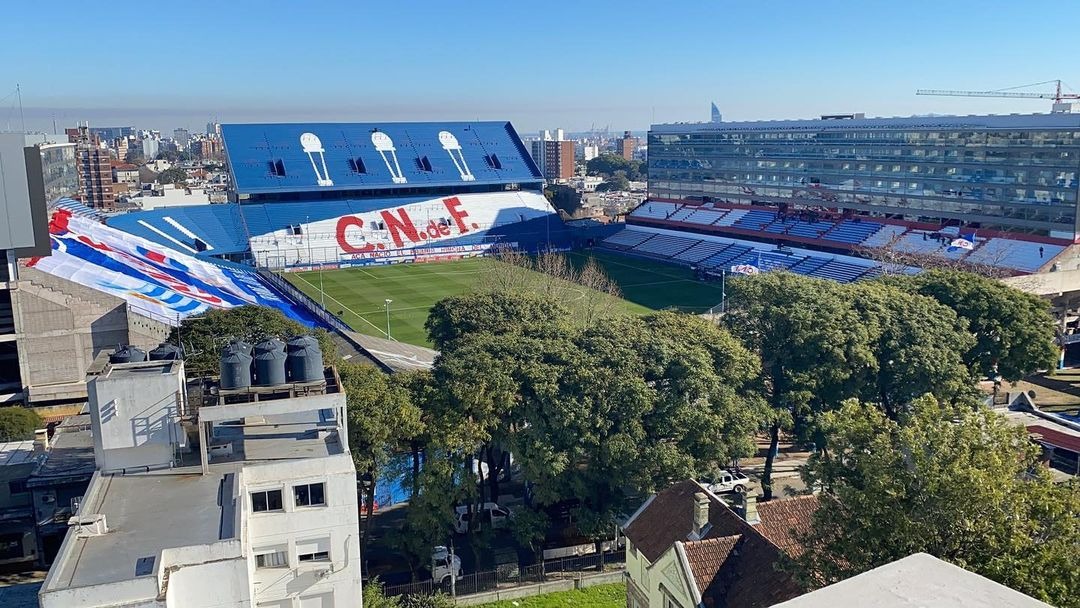
Photo: CotoBolso · CC BY-SA 4.0 · Resized; uncropped.

The current motion includes substantial protections around the club’s finances. Nacional says no individual construction phase can begin without sufficient funding to complete it, while the club itself would not assume project debt, guarantee the financing with its assets or commit its ordinary operating budget.
A separate trust would hold the project’s financing and cash flows. Nacional is exploring investment from multilateral lenders, banks, funds, operators and tenants, but no third-party financing commitments have yet been signed.
Saturday’s vote does not authorise construction of a US$150 million stadium project. Members are being asked to approve the master plan as the long-term architectural and strategic framework and allow the club to continue detailed design, permitting and negotiations with prospective investors. Individual construction phases would still require their own financing and approvals before work can begin.
Defensor Shows How Little of a Transfer Fee Can Reach the Selling Club
Defensor Sporting has published a detailed explanation of the economics behind Alan Matturro’s €4 million move from Genoa to Shakhtar Donetsk, showing how quickly a headline transfer fee can shrink before reaching the development club.
Defensor originally held 20% of Matturro’s economic rights. One representative was entitled to 35% of amounts generated by that participation, another held 15%, and a 2020 recruitment agreement required Defensor to pay Soccer Promotions 20% of every amount it actually received during the player’s career.
Taxes and commissions also reduced the base on which Defensor’s participation was calculated. The club estimated that the €4 million transaction left a base of approximately €3 million, making its original 20% worth around €600,000 before the additional participations were deducted.

The documentation surrounding previously ceded interests meant Defensor believed the portion still genuinely benefiting the club was only 15% to 30% of its original share. It therefore estimated a return of between €90,000 and €180,000 before financing costs.
Rather than wait approximately two and a half years for payment, Defensor sold its remaining participation for US$150,000 in cash. Once the representatives and Soccer Promotions received their shares, the club retained US$60,000.
A separate negotiation with Genoa produced another US$300,000 upfront. In return, Genoa received the right to match offers for three players currently in Defensor’s academy, the first time the Uruguayan club says it has monetised that type of preferential right.
Defensor received US$360,000 immediately from the two agreements. The club says that was approximately 78% more than the roughly US$202,000 it calculated it might otherwise have received from Matturro’s transfer, before considering the cost of waiting for the money.
South American transfer reporting generally stops at the headline fee, but Defensor’s disclosure shows how agent participations, previously ceded rights, taxes, commissions and payment schedules can reduce the cash ultimately retained by the development club.
Grupo Caliente Held Investment Talks With Barcelona SC
Grupo Caliente, the Mexican football and gaming group associated with businessman Jorge Hank and the Hank family, held talks over an investment in Barcelona SC and progressed far enough to visit the Guayaquil club and sign confidentiality documentation allowing information to be shared.
Barcelona president Miguel Montalvo disclosed the discussions this month, saying representatives of Grupo Caliente inspected the club’s facilities before the process subsequently cooled. He attributed the loss of momentum partly to publicity surrounding the negotiations, while no formal offer or agreed valuation has been announced.
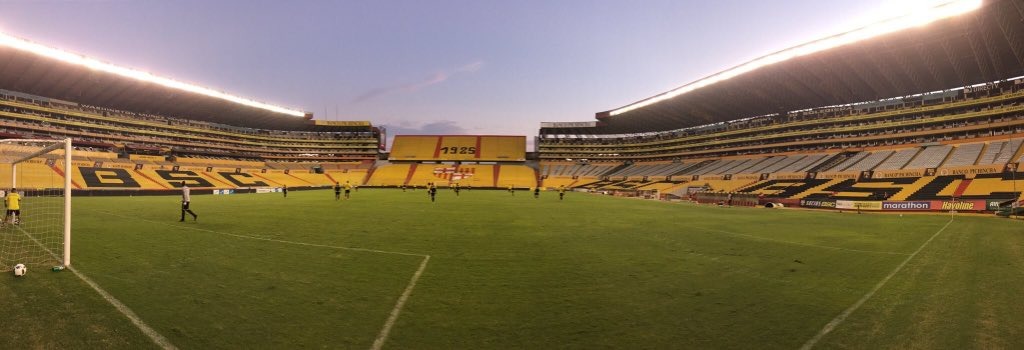
Photo: WRAO · CC BY-SA 4.0 · Resized; uncropped.

The discussions come as Barcelona examines how outside capital could be introduced while it prepares for a possible conversion into a Sociedad Anónima Deportiva. Montalvo has put the club’s liabilities at approximately US$52 million to US$53 million and has described conversion into a SAD as the most comprehensive long-term solution to its financial problems. Any conversion would ultimately require approval from Barcelona’s members.
Barcelona is also examining another financing option involving an investment fund of approximately US$25 million to US$30 million. Montalvo said that capital could be used to restructure the club’s liabilities while the longer SAD process moves forward.
Grupo Caliente owns Club Tijuana in Mexico. Hank and football agent Christian Bragarnik, both associated with the group, were also among the investors who acquired O’Higgins in Chile last year.
The Barcelona talks did not produce a transaction, but they progressed beyond an informal approach. Grupo Caliente visited the club and signed confidentiality documentation before the discussions lost momentum.
Universidad Católica Completes Global Sporting-Director Search
Universidad Católica has appointed Francisco Pérez Lázaro as its new sporting director, completing the international search launched after José María Buljubasich left the role following 16 years in charge.
Cruzados initially examined around 125 profiles before reducing the process to a small group of finalists. Pérez Lázaro, 39, arrives from the Football Association of Serbia, where he works in technical coordination and international scouting, and will join Católica after completing his responsibilities during the November international window.
His earlier career includes work at Aspire Academy, Al-Sadd, Delhi Dynamos, Deportivo Alavés and Chivas Guadalajara. At Chivas, his responsibilities extended across academy and professional football.
Cruzados president Matías Claro said the club wanted an executive with experience in a demanding environment, a background in player development and the ability to connect the different areas of the football operation.
The appointment completes a restructuring that also includes Javier Furwasser as head of the technical secretariat and Francisco Toledo leading the club’s new intelligence and data operation. Pérez Lázaro will oversee those functions when he arrives following Buljubasich’s 16-year tenure.
Liked this?
Get the next issue in your inbox.
Free, twice a week.