
FootBiz newsletter #198: Europe’s next great football trade is happening in the north
Scandinavian clubs are exporting players at extraordinary rates, while Nantes attracts buyers, Atalanta approaches €800m in estimated trading gains, Legia takes American capital, Palace rebuilds Selhurst Park and LaLiga spends again.
September 25, 2026
FootBiz has a new home. Visit the new FootBiz website
For years, European football's player-trading hierarchy was relatively easy to understand.
Portugal developed and imported talent before selling it into Europe's wealthiest leagues, the Netherlands did something similar and Belgium increasingly joined them.
Markets in another region are now impossible to ignore.
Europe’s next great football trade is happening in the north
According to FIFA's latest international transfer data, Danish clubs received US$194m in transfer fees during the 2026 mid-year window. They spent just US$70.8m.
Swedish clubs generated another US$117m, having spent US$31.7m.
Combined, those two countries therefore produced approximately US$311m of international transfer income against US$102.5m of spending.
And the trajectory is accelerating. The number of outgoing international transfers from Denmark increased 22% compared with the equivalent period a year earlier.
Sweden's increased 36.2%.
If these aren't enormous football economies, they are becoming enormously productive football marketplaces.
Clubs such as FC Nordsjælland, FC Midtjylland, FC Copenhagen, Brøndby, Malmö, Hammarby and Djurgården increasingly occupy a particularly valuable position in football's global supply chain.
They can recruit players before Europe's biggest leagues are prepared to take the risk and can provide meaningful first-team minutes earlier. They can buy in markets where Premier League or Bundesliga clubs either cannot or will not operate as efficiently, and when those players succeed, they can sell into an entirely different valuation environment.
The model doesn't necessarily require finding the next €100m player. It requires repeatedly turning relatively inexpensive recruitment into €5m, €10m, €15m and €20m assets.
The extraordinary thing is how large that business has now become. Denmark generated more international transfer income during the period than Türkiye, Argentina, Scotland, Poland or Serbia. Sweden generated more than Argentina.
And Scandinavia isn't alone.
Belgian clubs received US$515m while spending US$258m. Dutch clubs received US$405m while spending US$170m. Austria received US$187m against US$53.2m spent.
There is effectively a second European football economy developing beneath the richest leagues. England, Spain, Italy and Germany remain enormous consumers of talent.
Belgium, the Netherlands, Scandinavia and increasingly other smaller European markets are becoming suppliers.
For owners, that changes what a small-market football club can be. Now broadcasting revenue doesn't necessarily have to determine its economic ceiling.
The players can.


What is a Ligue 2 FC Nantes actually worth?
Waldemar Kita bought FC Nantes for approximately €10m in 2007.
Nearly two decades later, a sale now appears more plausible than it has for years.
He would not identify the bidders, citing confidentiality agreements, and specifically dismissed reports that one offer came from British investment funds.
Nantes was relegated in May and is now playing in Ligue 2.
Kita told Presse Océan that he has spent around €200m during his ownership, approximately €10m per year, without making money from the club.
What exactly are prospective buyers interested in when they buy FC Nantes?
The immediate financial asset isn't particularly attractive. Ligue 2 television revenue is modest. French professional football more broadly has spent several years dealing with a deeply troubled domestic broadcasting market.
Nantes also does not own its stadium.
But football clubs aren't valued purely on next year's cash flow. Nantes has won the French championship eight times and represents one of France's largest cities.
It has an academy with an international reputation and a history of producing players including Didier Deschamps, Marcel Desailly and Claude Makélélé and there are only so many football institutions of that scale available to buy.
That scarcity helps explain why valuations in football can behave differently from valuations in conventional businesses.
Kita says he isn't in a hurry but his language has changed.
After Nantes' relegation, he acknowledged questioning his own position and suggested a new owner might bring "a different vision" and "new momentum".
After almost 20 years, that sounds considerably more like a seller than it used to.

_-_2026-09-12_-_22.jpg?utm_source=footbiz.beehiiv.com&utm_medium=referral&utm_campaign=footbiz-newsletter-198-europe-s-next-great-football-trade-is-happening-in-the-north)
Atalanta’s player factory is approaching €800m in capital gains
There are clubs that sell players because they need money.
And there are clubs that have turned selling players into an industrial process. Atalanta belongs firmly in the second category.
This summer provided another remarkable example. Academy graduate Marco Palestra joined Chelsea for a package worth €60m, including €3m of bonuses, with Atalanta retaining a 10% interest in a future sale.
Palestra joined Atalanta when he was ten, with effectively no acquisition cost. He progressed through the academy, played for Atalanta's Under-23 side in Serie C, made 16 senior appearances, spent last season developing at Cagliari and has now become an asset worth approximately €60m.
It is difficult to design a more efficient player-development transaction.
But Palestra isn't an outlier. According to estimates by Calcio e Finanza, Atalanta is now approaching €800m in player-trading capital gains during the Percassi era. More than €500m of that has been generated since 2021.
Think about the conveyor belt.
Rasmus Højlund arrived from Sturm Graz and was sold to Manchester United a year later. Cristian Romero arrived from Juventus before eventually producing an enormous profit through Tottenham. Teun Koopmeiners was bought from AZ and sold to Juventus.
Dejan Kulusevski, Franck Kessié, Amad Diallo and many others passed through the same machine.
Then there are the players Atalanta actually produced.
Palestra therefore represents another extraordinary capital gain from Atalanta's development system.
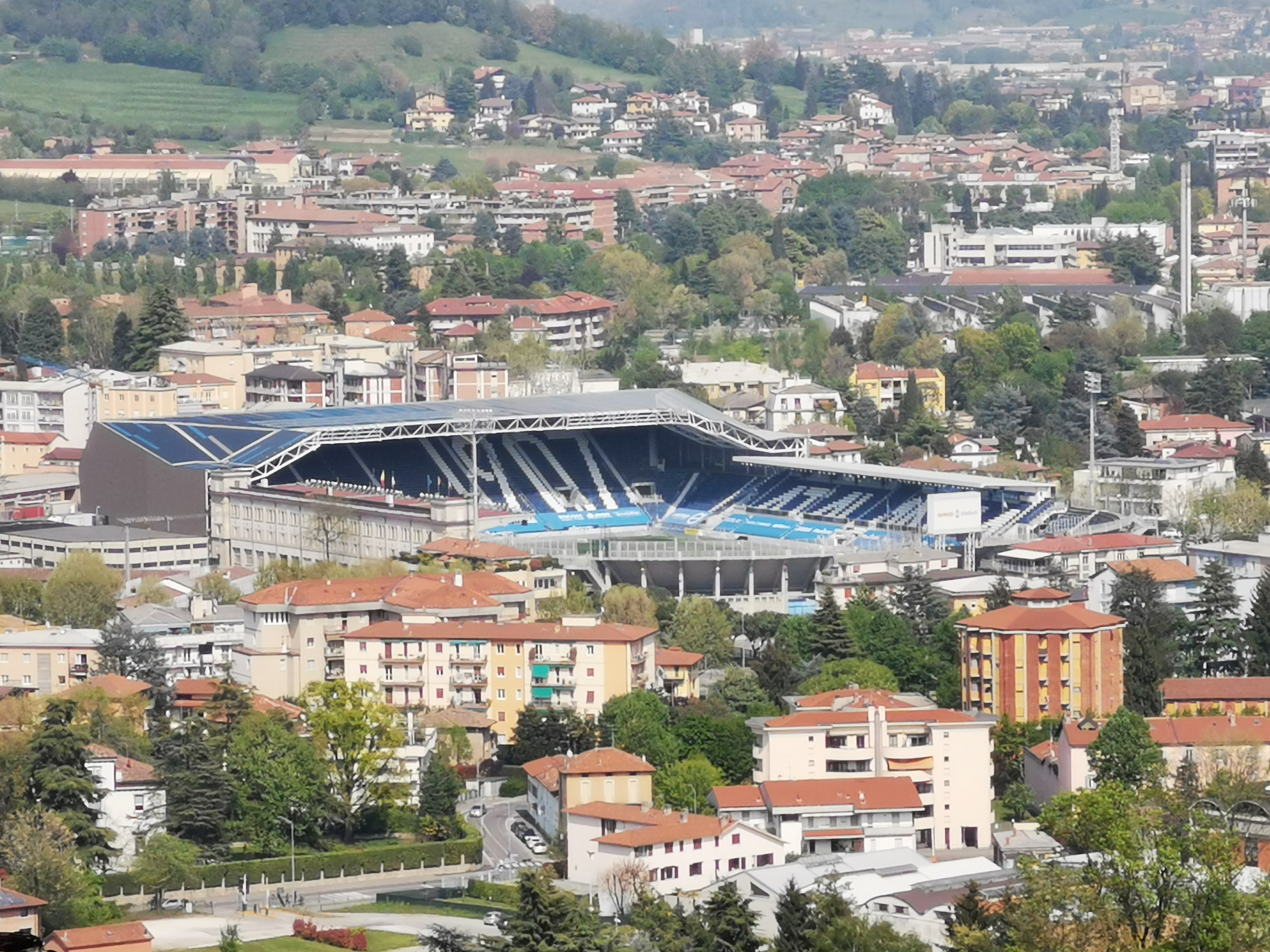
Atalanta hasn't achieved this by behaving like a distressed selling club. It has simultaneously qualified repeatedly for Europe, won the Europa League, expanded its stadium and established itself as one of Italy's strongest sporting organisations.
Player trading has financed sporting ambition rather than replaced it.
That's the difference between a club that occasionally sells players well and a genuine trading model.
Recruitment identifies undervalued talent, coaching increases its value, first-team opportunities provide evidence, European competition provides exposure, sales crystallise the gain and the money is then recycled into the next generation.
Our industry spends enormous amounts of time talking about transfer expenditure but Atalanta demonstrates why the more revealing number is often return on transfer investment. Few clubs have been better at it.

An American has just bought 40% of Legia Warsaw
Another American investor has entered European football.
This time, however, he hasn't bought in England, France or Italy. He has gone to Poland.
Michael Gorzynski, an American entrepreneur and investor of Polish heritage, has acquired 40% of Legia Warsaw and become chairman of the club's supervisory board.
Existing owner Dariusz Mioduski retains 60%, remains majority shareholder and continues as president of the management board.
This deal isn't simply Gorzynski buying some of Mioduski's shares and handing the existing owner a cheque.
It combines three elements – new Legia shares issued through a capital increase; existing shares purchased from Mioduski and a shareholder term loan facility to finance the club's ongoing operations. In other words, some of the capital actually goes into Legia.
The club says the transaction will strengthen its balance sheet, reduce debt and increase its ability to invest, which is timely because Legia is precisely the kind of European football asset international investors are increasingly beginning to understand.
It dominates a major metropolitan market and Warsaw has a population approaching two million. Legia also has one of Poland's largest supporter bases, a modern municipal stadium opened in its current form in 2010, and regular access to UEFA competition.
Yet the cost of acquiring a substantial interest remains dramatically below the price of buying a comparable sporting institution in one of Europe's Big Five leagues.
The challenge is revenue. Polish domestic television and commercial income cannot match England, Germany, Spain or Italy.
That makes European qualification and player trading disproportionately important but that can also be the investment thesis.
If European football becomes still more international commercially, and UEFA competitions continue distributing greater sums beyond the biggest leagues, the valuation gap between clubs such as Legia and Western European equivalents becomes increasingly interesting.
Gorzynski has bought enough of Legia to matter and, crucially, he has put capital behind the bet.


Crystal Palace have outgrown Selhurst Park. Now comes the £200m question
Crystal Palace has spent much of the past decade transforming almost everything except its stadium.
The club has established itself in the Premier League, invested heavily in its academy and training infrastructure, won the FA Cup and then the UEFA Conference League, and attracted some of the wealthiest investors in American sport.
Selhurst Park, meanwhile, still contains a Main Stand that was built in 1924. That is finally changing.
After years of planning, delays and escalating construction costs, Palace has begun the physical work required for a redevelopment that will increase Selhurst Park's capacity from approximately 26,000 to more than 34,000.
The existing Main Stand holds around 5,200 supporters. Its replacement will accommodate 13,500, spread across three tiers, and include significantly expanded corporate hospitality alongside a new club shop, museum and café.
The economics of the project have changed considerably since Palace first proposed it. When the redevelopment was unveiled in 2017, its expected cost was around £75m. By 2022, that had doubled to approximately £150m following the pandemic and increases in construction costs.
More recent estimates suggest the eventual bill will now exceed £200m. That sounds enormous for a project adding roughly 8,000 seats, although the seats themselves aren't really the point.
Modern Premier League stadium economics are increasingly determined by what clubs can sell around those seats by way of hospitality, experiences and non-matchday events. They become corporate spaces that can generate revenue throughout the week rather than on 19 Premier League afternoons each year.
That is where Selhurst Park looks like an anomaly.
Palace has occupied the stadium since 1924 and has now spent 13 consecutive seasons in the Premier League, but its physical infrastructure has not developed at anything like the same rate as the football business around it.
The redevelopment therefore represents more than a capacity increase. It is an attempt to close part of the commercial gap separating Palace from clubs with comparable sporting ambitions but considerably more productive stadiums.
The timing is particularly interesting because Palace itself has become substantially more valuable.
Woody Johnson, owner of the NFL's New York Jets, acquired 42.92% of Palace in 2025 after buying John Textor's stake. The transaction valued the club at approximately £550m, according to subsequent reporting.
Johnson joined an ownership group that already included American investors Josh Harris and David Blitzer alongside chairman Steve Parish.
In June, The Financial Times reported that Harris and Blitzer were examining a sale of their combined 30% holding, with other possibilities for bringing new capital into Palace also under consideration.
That makes the stadium particularly relevant to any discussion of Palace's future value.
Palace is finally removing the obstacles that prevented that infrastructure from being built. The club completed the acquisition of six neighbouring houses in Wooderson Close in January. Demolition began in June.
It has also reached an agreement with Sainsbury's over land required from the supermarket's adjoining car park, while changing rooms, electrical infrastructure and other facilities are being relocated to allow construction to proceed while Selhurst Park remains operational.
Palace cannot simply close Selhurst Park for two years and rebuild it. The new structure is being designed around the existing Main Stand so that the stadium can continue hosting matches during construction.
When it is finished, however, the economics of Selhurst Park should look very different. An additional 8,000 or so spectators across 19 Premier League home games alone represents more than 150,000 additional tickets available each league season before cup matches are considered.
Converting a century-old stand into premium inventory appropriate for one of the richest football competitions in the world will be the larger prize.
For years, Palace's stadium has arguably placed a ceiling on the commercial development of the club and the extraordinary thing is that Palace has continued growing anyway.
Now the football club and the infrastructure surrounding it are finally beginning to catch up with one another.


Spain has started buying players again
Something quietly changed in Spain this summer.
LaLiga clubs spent €748m on players.
That figure isn't particularly remarkable by Premier League standards, indeed English clubs spent several times as much.
What matters is what happened on the other side of the ledger. Spanish clubs generated only €485m from sales when a year earlier they had generated almost €680m.
That means LaLiga moved from something approaching transfer-market equilibrium towards approximately €263m of net expenditure.
It may be an early indication of a changing cycle. For much of the post-pandemic period, Spanish football became associated with financial constraint.
Barcelona's problems were the most spectacular manifestation, but LaLiga's squad-cost controls forced clubs throughout the competition to think carefully about registrations, wages and transfer expenditure.
Spain became a market where clubs sold before they bought but the latest window looks different.
LaLiga's €748m of expenditure still left it fourth among Europe's major leagues, behind England, Italy and Germany, but the reduction in outgoing transfer revenue meant Spanish clubs generated considerably less from player sales while still increasing their expenditure.
FIFA's international data points in the same direction. Spanish clubs spent US$940m on international transfers during the mid-year period and received US$773m, while the number of incoming international transfers increased 28%.
That doesn't mean Spanish football has suddenly recovered the spending power it possessed before the pandemic. It hasn't.
The Premier League remains in another financial universe but player markets are relative.
If Spanish clubs can retain valuable players while becoming slightly more aggressive buyers, the effect compounds. Squads become stronger, clubs become more competitive in Europe, players subsequently become more valuable and the league becomes more attractive commercially.
For several years, the story of Spanish football's transfer market was about what its clubs could no longer afford. Let’s see if that period is beginning to end.


Sources
FIFA — Mid-Year Transfer Snapshot 2026
L'Équipe — Waldemar Kita says Nantes has three acquisition proposals
Calcio e Finanza — Atalanta approaching €800m of capital gains in the Percassi era
ANSA — Marco Palestra completes Chelsea transfer
Crystal Palace — official Main Stand redevelopment page
The Stadium Business — Selhurst Park redevelopment cost exceeds £200m
Piditkö tästä?
Tilaa seuraava numero sähköpostiisi.
Ilmainen, kahdesti viikossa.